

Maestro of a Lost World
HERMES TRISMEGISTUS The Warning
MAESTRO OF A LOST WORLD: On the Path to Sky-End

Among the many artefacts in the Ashmolean Museum in Oxford, England, lies a unique but largely forgotten clay tablet inscribed some four thousand years ago in the cuneiform language of ancient Mesopotamia: a prism covered in tiny neat signs laid out in careful order across its four surfaces. And since it arrived in that place, it has been vainly signalling that something of great importance is written on it, that the information it contains was once considered of great value. Look more closely. There is so much about it that has been left unsaid.
In truth, the tablet tells a fundamental story: that of a great astronomer, a maestro of the skies on a quest to relay age-old knowledge to future generations. Among its numerous encoded messages, it confirms that the mysteries embodied in the Giza plateau in Egypt, its pyramids and its Great Sphinx, were indeed described in the writings of the so-called ‘Sumerians’. At the source of it all is the wisdom teacher known to us as Thoth who is also Hermes Trismegistus, author of the equally unique and enigmatic Emerald Tablet.
Every aspect of the artefact is involved in the process of the telling; its lines laid out to encode numbers of importance in astronomy, geometry, music… They integrate the 25,920-year cycle of time called the precession of the equinoxes, and the number known as Pi, used to calculate the circumference of a circle. There was once a shaft through the hole at its centre, serving to turn the prism in an anticlockwise direction, imitating the flow of the sun and gloriously decoding the most perfect musical pitch.
Not only that. It tells us that other extremely ancient sites, those recently uncovered in south-eastern Turkey – Göbekli Tepe, Catalhöyük, Karahan Tepe, Sayburç – and another in the distant land of Peru, all carry signs of the Great Egyptian Maestro. They too dance to his music and, however softly spoken He may be, His great work can no longer be ignored.
A re-translation of Enki’s Journey to Nibru (ca.1600 BC), my latest book (published April 2024) includes an extensive introductory section, the complete 129-line text peeled back to the most ancient pictographic script of the Sumerian language and detailed explanations of the translated words and riddles.
***
Line 8. On a Wave
On the rising ocean, his father at the levee to know
and on the wave to fittingly expand, thick clay of the land
(ballast and writing material) inside the cog-boat will stand.
***
Line 12. Pride of the Rooster
To the hen (Gallina, Cygnus) circling in the reeds with the cow (Milky Way)
the greatness of the giant (Orion, giga-) to show,
three galleys on the cog-boat (and a three-pronged rod for the cow),
less lowly hand-rubbing and oily words to say below (Al Nitak, Orion’s belt).
Latin cingulum: ‘girdle’, ‘sword-belt’, from cingere ‘to surround’, ‘encircle’.
***
Line 20. The Absent Father
On the founding brick in clay of the land (Mother of Truth, Ma’at)
the word will be carried (Deucalion) of the absent father (absum, Kronos)
and on it placed the name and the sum of his time.
Then I saw an angel coming down from heaven with the key to the Abyss, holding in his hand a great chain. He seized the dragon, that ancient serpent who is the devil and Satan, and bound him for a thousand years. And he threw him into the Abyss, shut it, and sealed it over him, so that he could not deceive the nations until the thousand years were complete. After that, he must be released for a brief period of time. (Revelation 20:1-3)
***
Line 22. The Stone Key
Of his Father (Kochab) and the flow (of the Abyss) to learn,
on the Tether of the Perfect Pitch (brew, Tepi, Thebes) tied to the horn of the Cow
to her Spring of Milk (Siwa, Vega) the sailor (Phaeton) will go.
(Knowledge in the Pyramid of the Ancestor is tied together by Pi.)
22 / 7 (words) = 3.142857
Behold, I am coming soon. (Revelation 22:7)
***
Line 34. The Way
In the Temple of the Winding Canal the king will learn the way,
on the wind of the land and on the bird carried,
and in the immaculate clay (of Ma’at) the truth of the land will gather.
(The King) will cross with you on Thoth’s wing to the other side of the Winding Canal, to the eastern side of the sky. (Book of the Dead, trans. J.P. Allen, 1910)
***
Line 42. Forty-Two Questions
The heart of death to know and its truth to question,
in the Great Throne Room (TA BARAG MAHA, Mahabharata)
on a winged steed he will measure the beat of that place.
At once I was in the Spirit, and I saw a throne standing in heaven, with someone seated on it. (Revelation 4:1-2)
***
Line 60. Music of the Spheres
As the Lord between Sky and Earth his music plays (Orpheus),
the sun and moon and all the stones of Time and Place
are churned and the sky weeps.
25,920 / 60 = 432
***
Line 73. The Rising Son
The lord from the immaculate clay of the Mother of the land
and in Her Truth weightless to the sky will rise.
Behold, a virgin shall conceive and bear a son, and shall call his name Immanuel. By the time He knows enough to reject evil and choose good. He will be eating curds and honey. (Isaiah 7:14-15)
***
Line 83. Because I Rest Upon the Abyss
But to the fatherless waters of the abyss and to the daemons of the spirit world
by the limb of the bull (Boötes) a side-door has been opened…
David digs the temple foundations and causes a flood by lifting out a stone. (Hamlet’s Mill, p.220)
***
Line 92. KAKAKAKTUS
“The brew of the bee (Kabeiri) and the beer of the bitter son of Ra
(Golden Calf, Marduk) will be mixed into milk (Hekate) for the fool.”
a cackling voice like flowing thorns (cactus, acacia) is heard to say…
Then he took the calf they had made, burned it in the fire, ground it to powder and scattered the powder over the face of the water. (Exodus 32:20)
***
Line 96. Nibru
“The foolish lord (in Nibru) on the oiled path of the bull
with a single stroke (of the dill stalk, of the mill handle)
to the world as ashes will be carried.”
In those days men will seek death and will not find it; they will long to die but death will escape them. (Revelation 9:6)
***
Line 98. Battle of the Bees
The foolish lord between sky and earth (Phaeton) with the bees (Pleiades, Praesepe)
on either side of the trees (Eden) high and low (baetyl) in the vines entangled,
the winding snakes above and below (Draco, Hydra)
from one end to the other all binding.
For oft ‘twixt king and king with uproar dire fierce feud arises. (Virgil, Georgics, Bk.4)
***
Line 102. The Hum Begins
(says) “The bitter sweet voices of the honeybees humming on the loom of Ma
the truthful measure of the path of the bull at night will tell…
and less stirring of the oil will do.”
When the flight of a swarm is imminent, a monotonous and quite peculiar sound made by all the bees is heard for several days… (Aristotle, The Nature of Animals, Part 40)
***
Line 112. The Devil and the Divine
From the roaring brazen mouth, the celestial ark will rise,
held aloft on two adamantine arms (two stone pillars),
with their One Divine Name and the ages of the land
which the devil will divide in fire – once again.
Hold fast to what you have, so that no one will take your crown. The one who overcomes I will make a pillar in the temple of My God, and he will never again leave it. Upon him I will write the name of My God, and the name of the city of My God. (Revelation 3:11-12)
***
LOST STONES OF THE ANUNNAKI
And The Mind-Altering Journey To Find Them
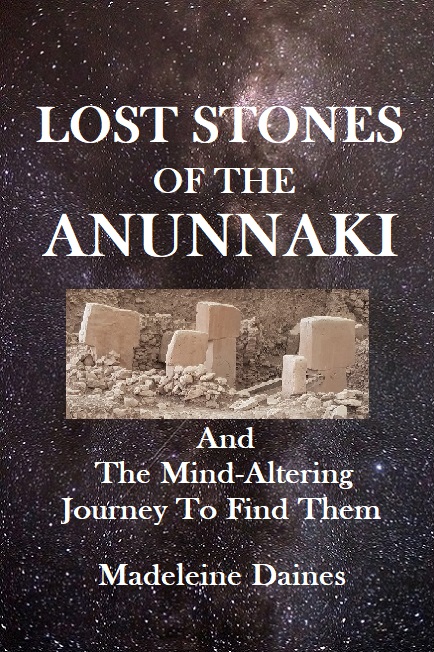
Why did the people who wrote in Greek, Latin, Arabic, Hebrew, or Aramaic in antiquity never find cause to write about the Sumerian Anunnaki gods? Gilgamesh was mentioned by name early on, the antediluvian Sumerian kings also, but not the Anunnaki. Why was their illustrious name unknown throughout history until the 19th century AD when the Mesopotamian clay tablets were rediscovered and translated?
In 1970, a reputed philologist, John Marco Allegro, made two highly unorthodox and controversial claims in his book, THE SACRED MUSHROOM AND THE CROSS. He asserted that the name of Jesus was taken from that of a mushroom with mind-altering properties, and that Sumerian was not only the source of the biblical name but more generally provided the missing link between numerous later languages: Greek, Latin, Hebrew, Aramaic… Was he wrong or was he right? On one count or on both?
What might a fresh look at the Sumerian language tell us about the Anunnaki and those names that have come down to us through the myths of Ancient Greece and Egypt, the biblical texts or the history books? About Atlantis, about the Gnostics and the Pagans, Moses, Osiris, Jesus, Odysseus, Jonah and the Whale, Mesopotamia and Tammuz, to name just a few?
LOST STONES OF THE ANUNNAKI And The Mind-Altering Journey To Find Them, reflects on the original meaning of the Anunnaki name made famous by Zechariah Sitchin, and also John Allegro’s suggestion that the earliest written language is steeped in magic mushroom lore. Along with the academic translations, these are the only two sources which have given us all our Sumerian food for thought – until now.
LOST STONES OF THE ANUNNAKI brings back to life the important words and meanings that have been glossed over, missed or misinterpreted in modern times. Following on from the retranslation of the Sumerian text known as THE INSTRUCTIONS OF SHURUPPAK and renamed THE STORY OF SUKURRU to better fit the narrative discovered there, this book makes use of lines from that text but also other referenced Sumerian writings.
It peels back the layers from assumptions made in both ancient and modern times concerning the origins of certain important names – the Sabians, the Chaldeans, Harran, Abraham – and looks for the truth in far older documents.
It digs into the messages concealed in riddles found on tablets from the Old Babylonian period, ca.1900-1600 BC.
It looks into the meanings behind the multi-syllabic names on the antediluvian SUMERIAN KING LIST (see the article on Graham Hancock’s website linked above), casts an inquisitive eye over an ancient name of the Great Sphinx at Giza in Egypt, and asks a few pertinent questions of the Gobekli Tepe stones in the language of that place.

THE STORY OF SUKURRU
Sumerian Symbols and their True Meaning

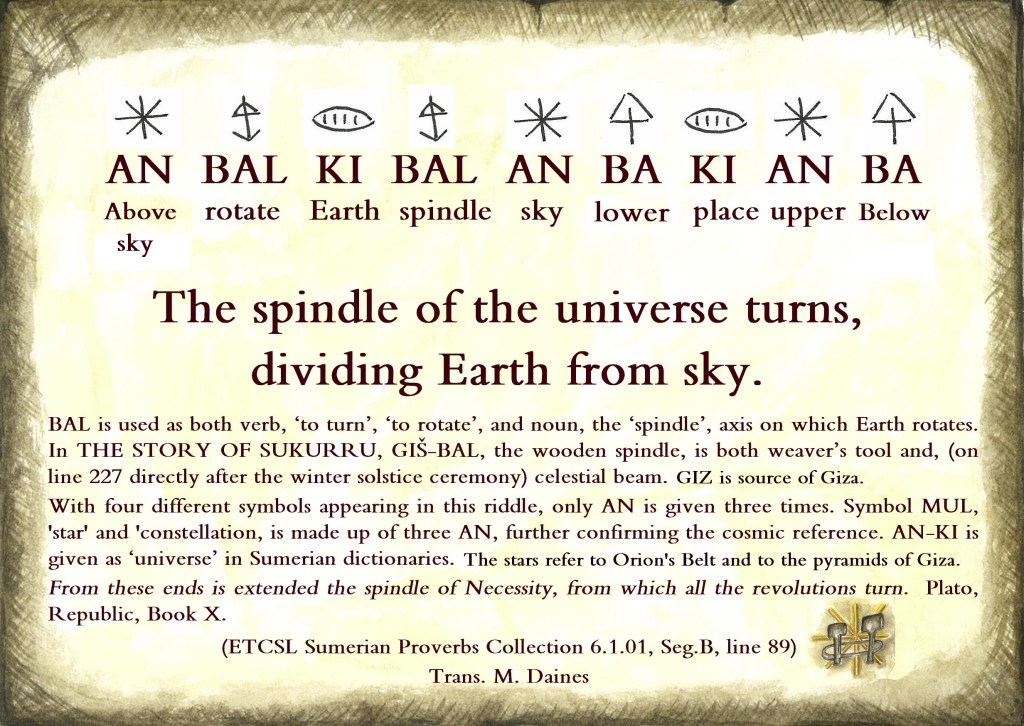
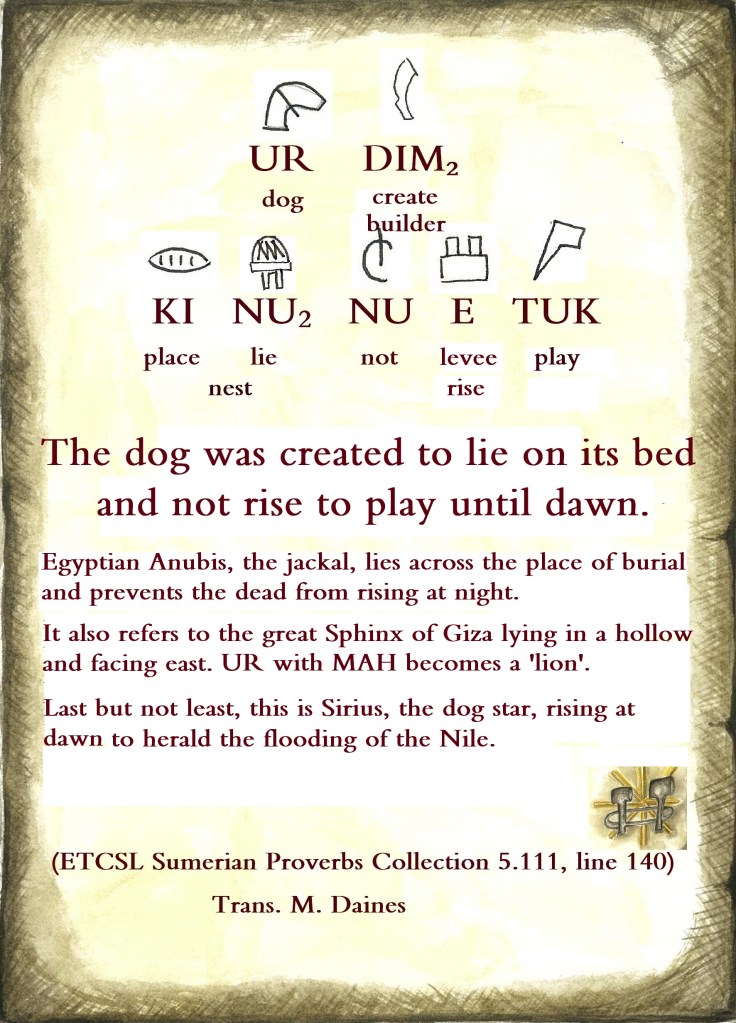
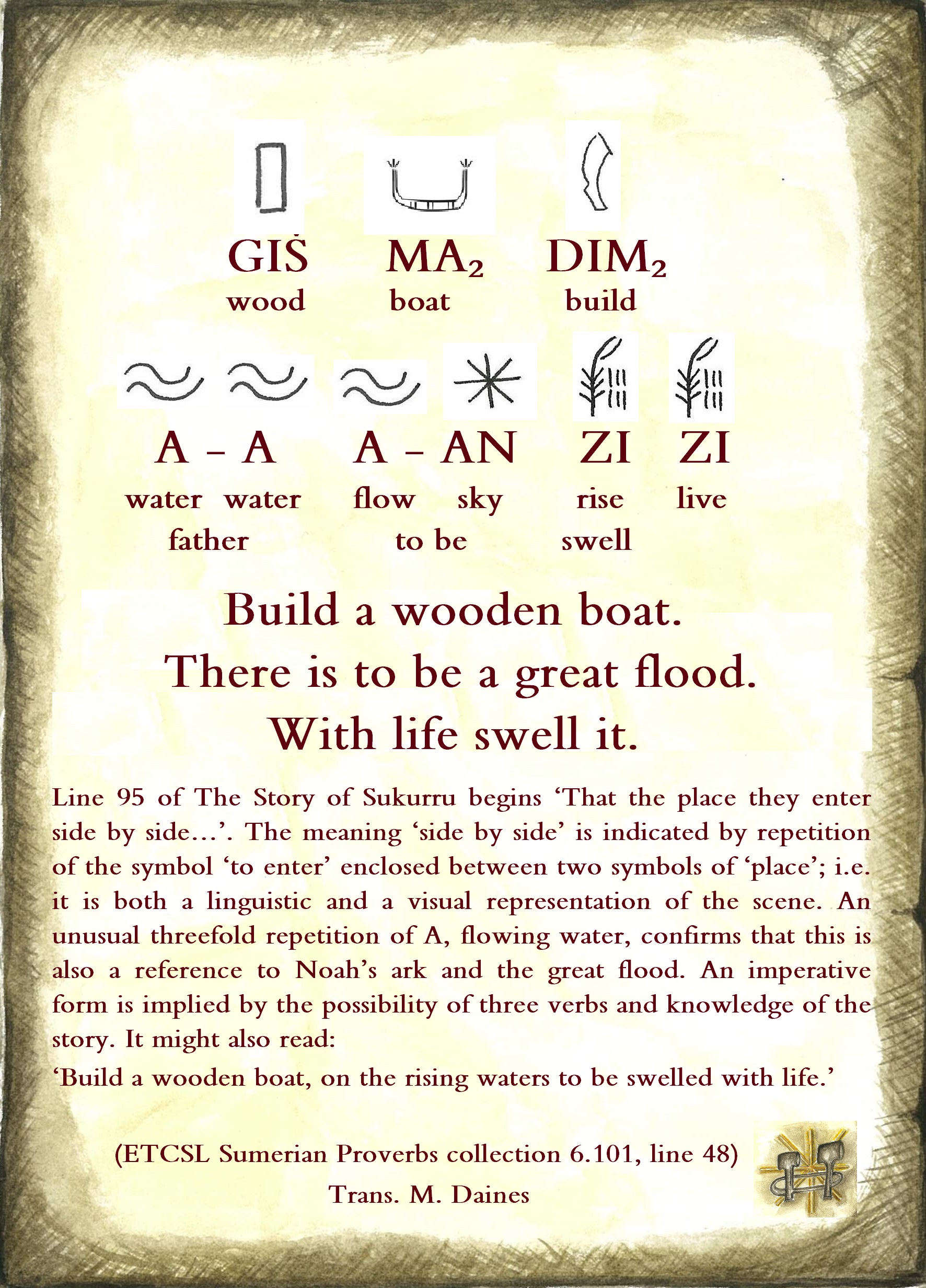
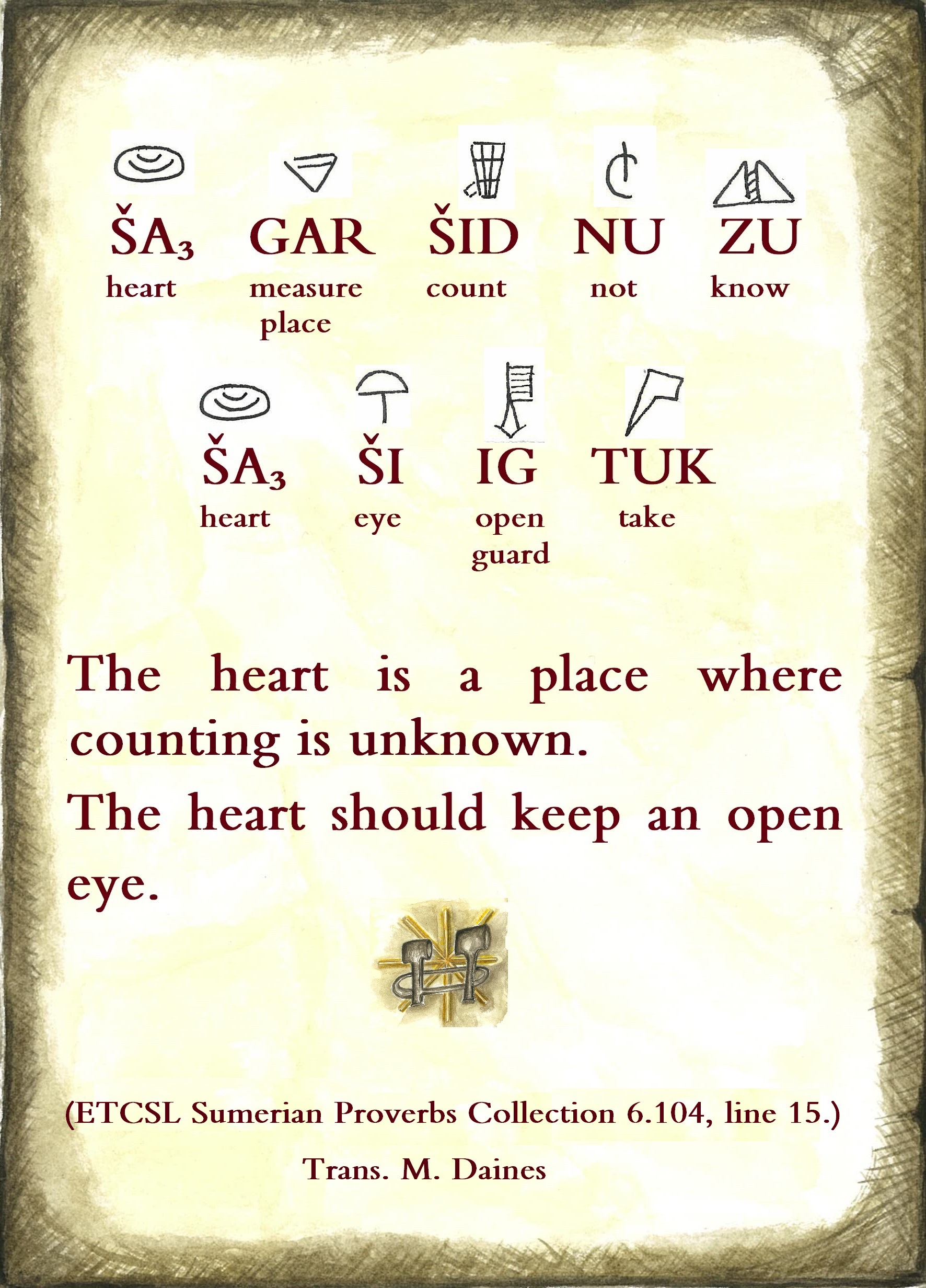
THE STORY OF SUKURRU is a complete re-translation of the oldest known literary text in the world today, 280 lines and approximately 3,000 words. Using an innovative yet logical method taking all the symbols/words into consideration with their independent meanings produces a result completely at odds with everything that has gone before. One of the most important features of this translation is that it brings to light unheard of yet indisputable links to worldwide mythologies and to many languages. Since publishing THE STORY OF SUKURRU in 2017, I have written an explanatory book: BEFORE BABEL THE CRYSTAL TONGUE, published in 2019. Some further explanations are given below and the Sumerian proverbs, posted from time to time, also give an idea of the layout of my translations. A revised edition of THE STORY OF SUKURRU was published on June 9th, 2020, to include a full explanation of the recently discovered acrostic hidden therein. For those who already have a copy of the translation, THE SUMERIAN SOLSTICE RIDDLE is also discussed and the solution given on the AoM board of Graham Hancock’s website. See the link in the Proverbs section here below. It follows on from the related riddle of the Speaking Ass.
There comes a time when the veil must be lifted or the truth about our past will be lost forever. What follows is an ancient story, a text retrieved from under the sands and then hidden again, this time in plain sight, for more than a century. It is a rare bridge that allows us to step backwards beyond every episode of our history, every written word since 2600 BCE. That the tale is obscure in some parts or appears light-hearted and even bawdy in others does not detract from its fundamental importance. Each symbol was once selected with great care to convey a multi-layered story. The dividing line between the author’s choice of symbols and the translator’s choice of words, like the dividing line between truth and lies, is an affair of the heart. The writing may be mine but the meaning of it all is of another age. This is a true translation, and truth is light as a feather, the feather of the Great Matriarch. It was carried out according to the Principle of Ma who is my judge. It begins:
By day, the deluge. That distant day, the deluge.
By night, the deluge. That endless night, the deluge.
In that age, the deluge. That bygone age, the deluge.
Then, the Tree of Consciousness and Knowledge was there.
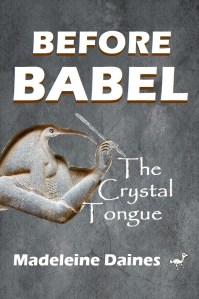
BEFORE BABEL
THE CRYSTAL TONGUE

The past has been forgotten because we have lost the language of it. Bloodshed isn’t mentioned in the story of the Tower of Babel and yet a murder took place in it, the saddest story that we have. Who carried out the crime? This book points out the groundwork. The rest of the mystery is beyond my remit. I have no personal agenda with regard to history other than to find the truth by going back and picking up the thread at the oldest possible source. The result is not the expression of personal opinion or cultural, religious beliefs, but of the consultation of the Sumerian symbols themselves. They have enough to say without forcing and twisting. Coaxing is all it takes.
This book is not a translation. It’s an explanation, a study of the earliest symbols, foundation stones of many if not all later languages, showing how to read and understand them, bypassing the officialised narrative that has built up over past centuries. Making use of conventional sources to resuscitate the original meanings, I demonstrate the translation method that refutes the academic understanding of Sumerian texts. The conclusions are all grounded in substantiated findings based on the forms of the old pictograms, their given and their forgotten meanings in context.
Serving to further explain the importance of THE STORY OF SUKURRU with its many references to Egyptian lore, biblical stories and other worldwide myths, BEFORE BABEL THE CRYSTAL TONGUE presents images of over 150 symbols. Many of them are discussed individually and in context. Begin to interpret this most sacred of languages where each symbol has inherent meaning, and where the placing of each symbol follows rules that are not found in modern grammar books. It can be likened to a game, a code, a riddle. At the heart of it, a Great Magician. The old Sumerian symbols, still warm from his touch, are waiting to explain themselves.
Control over the naratives of our past began thousands of years ago with the obfuscation of the earliest Sumerian symbols.Their meanings were scrambled and the truth about the civilisation that first created them was hidde
There was a time when bands of minstrels roved the lands of Mesopotamia, with instruments and theatre props swaying along on lofty camels. Arriving fothe springtime celebrations, the harvest festival or the winter solstice ceremonies, these bards sang and played in streets and public gardens, gathering shekels from the audience as they went. Their performance would begin with a slow and sober remembrance of the Flood, of desperate people clinging to life as a great golden era passed away. Then, in true Homeric style, a minstrel would step forward to prepare the audience for their entertainment
Find here the first key to a magical door opening onto a place that is, at the very least, 4,600 years old. Use it to bypass ancnt Greece and Rome. Use it to step back beyond the Tower o
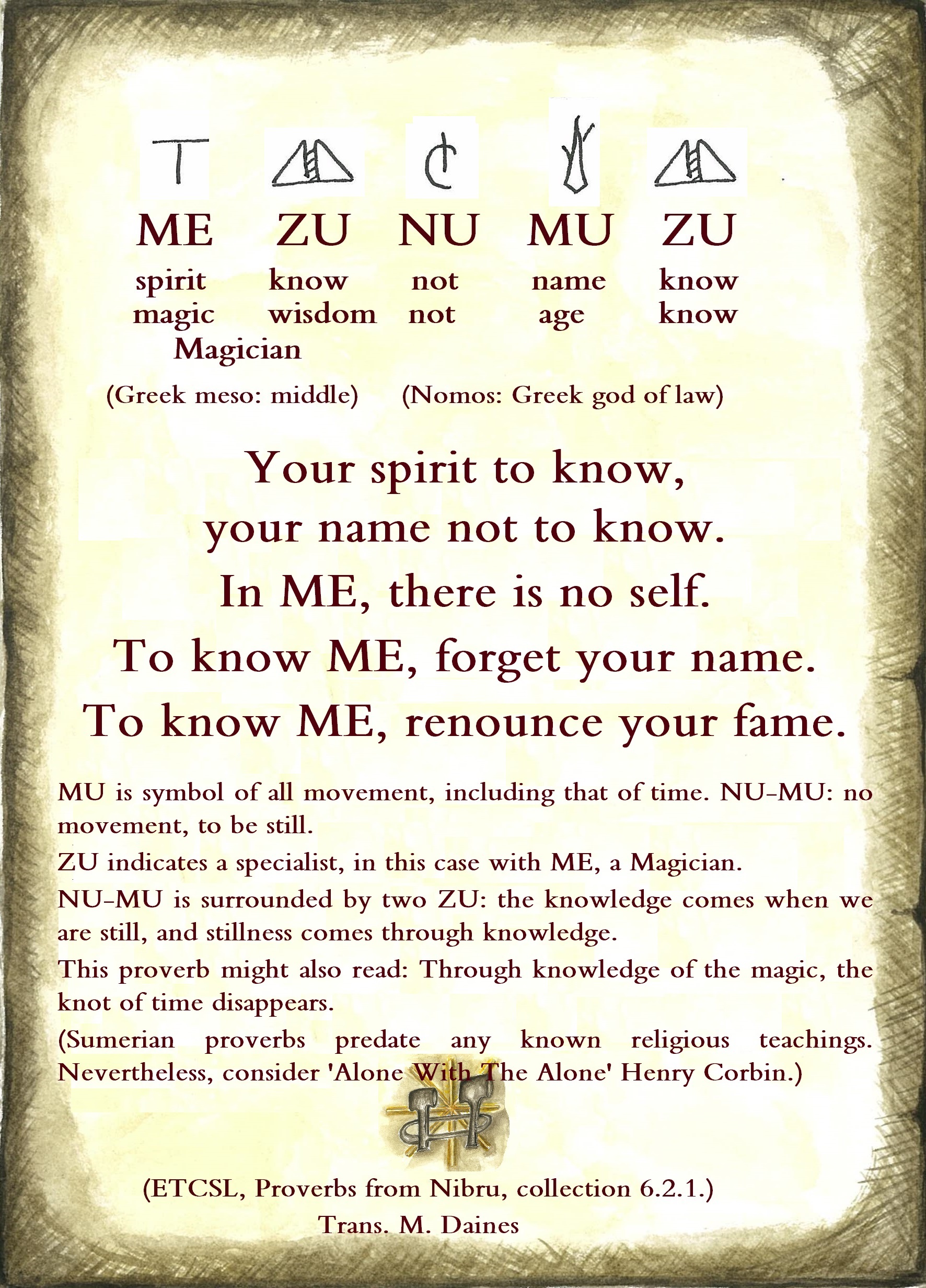
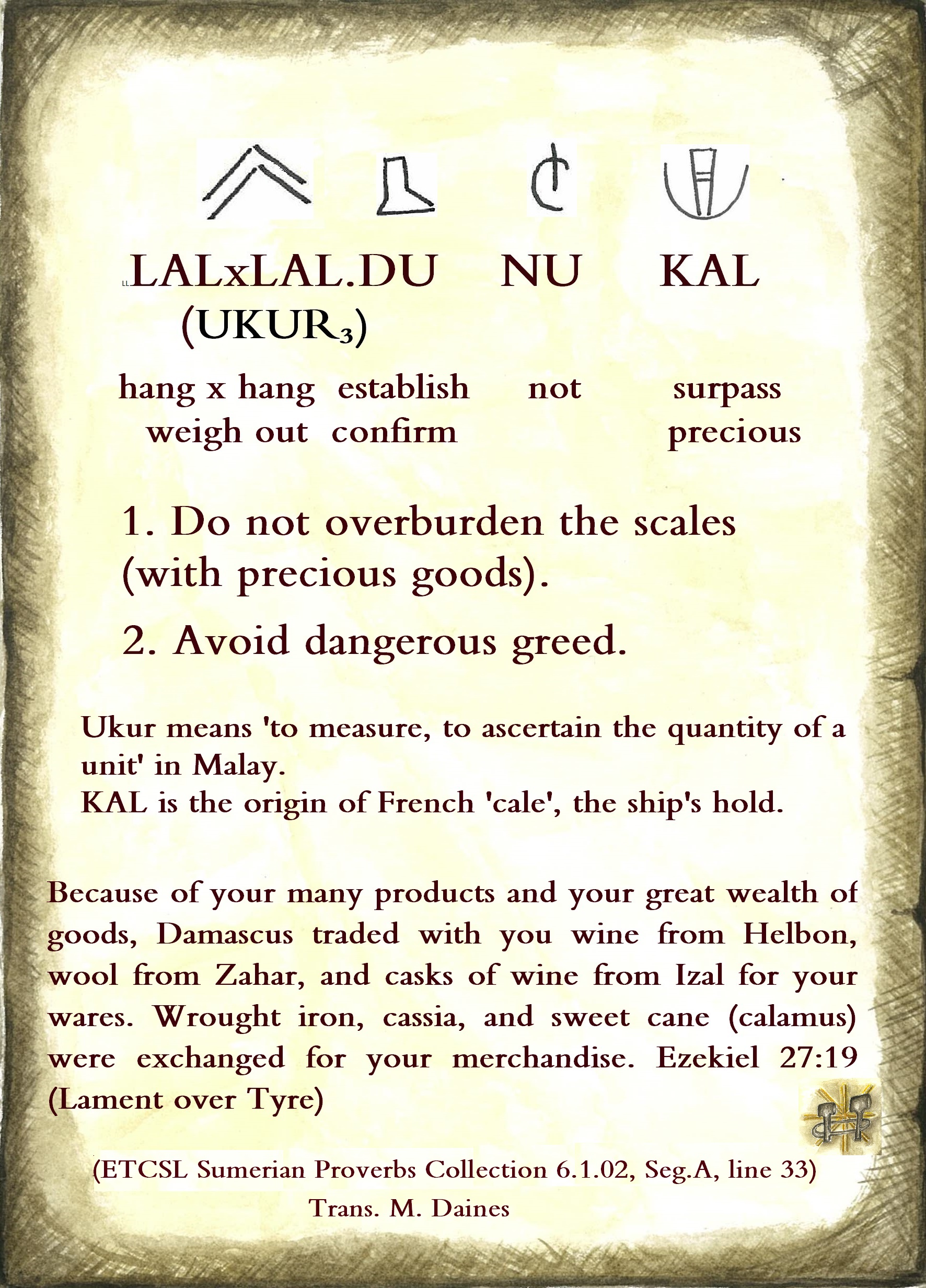
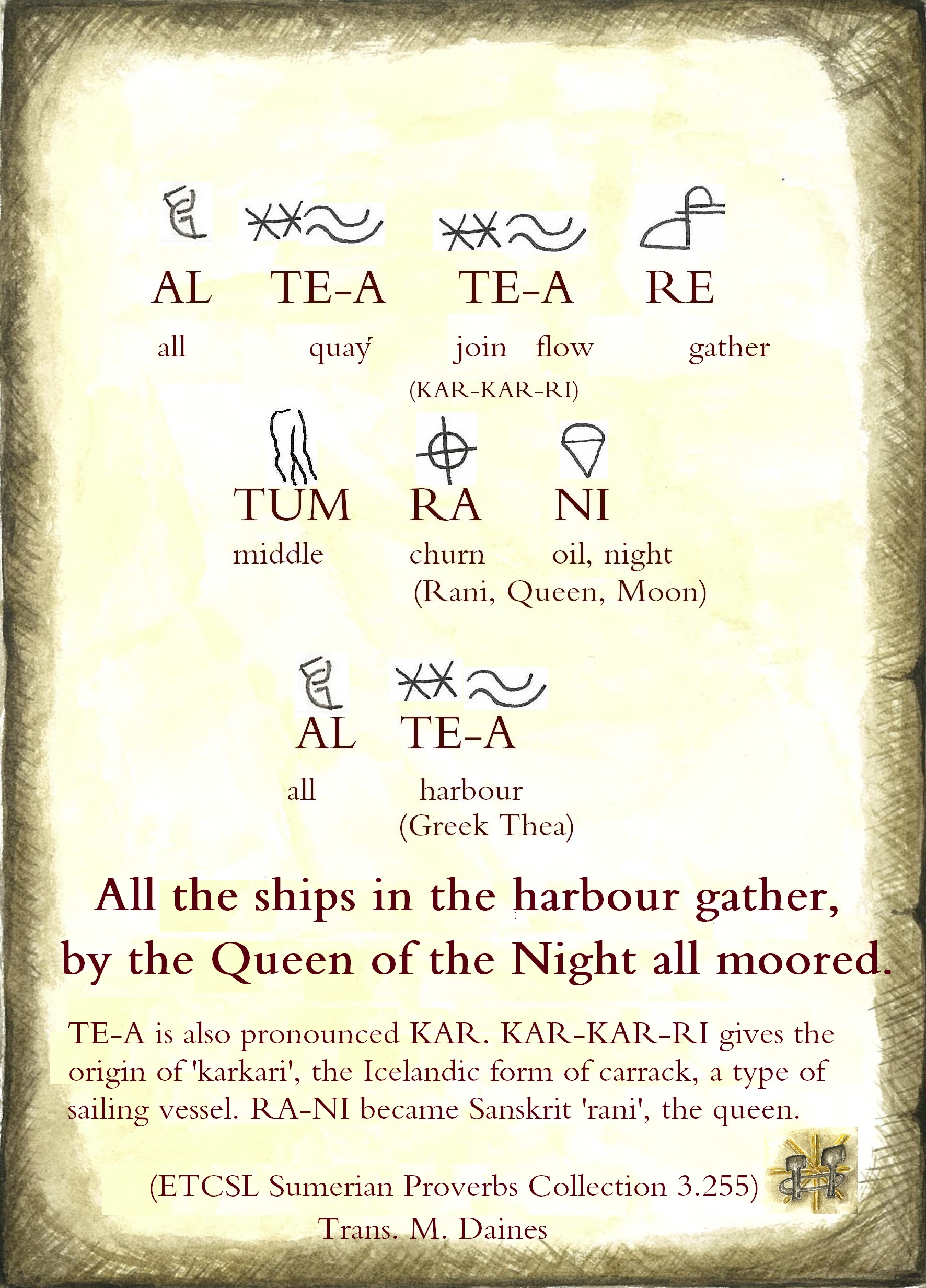
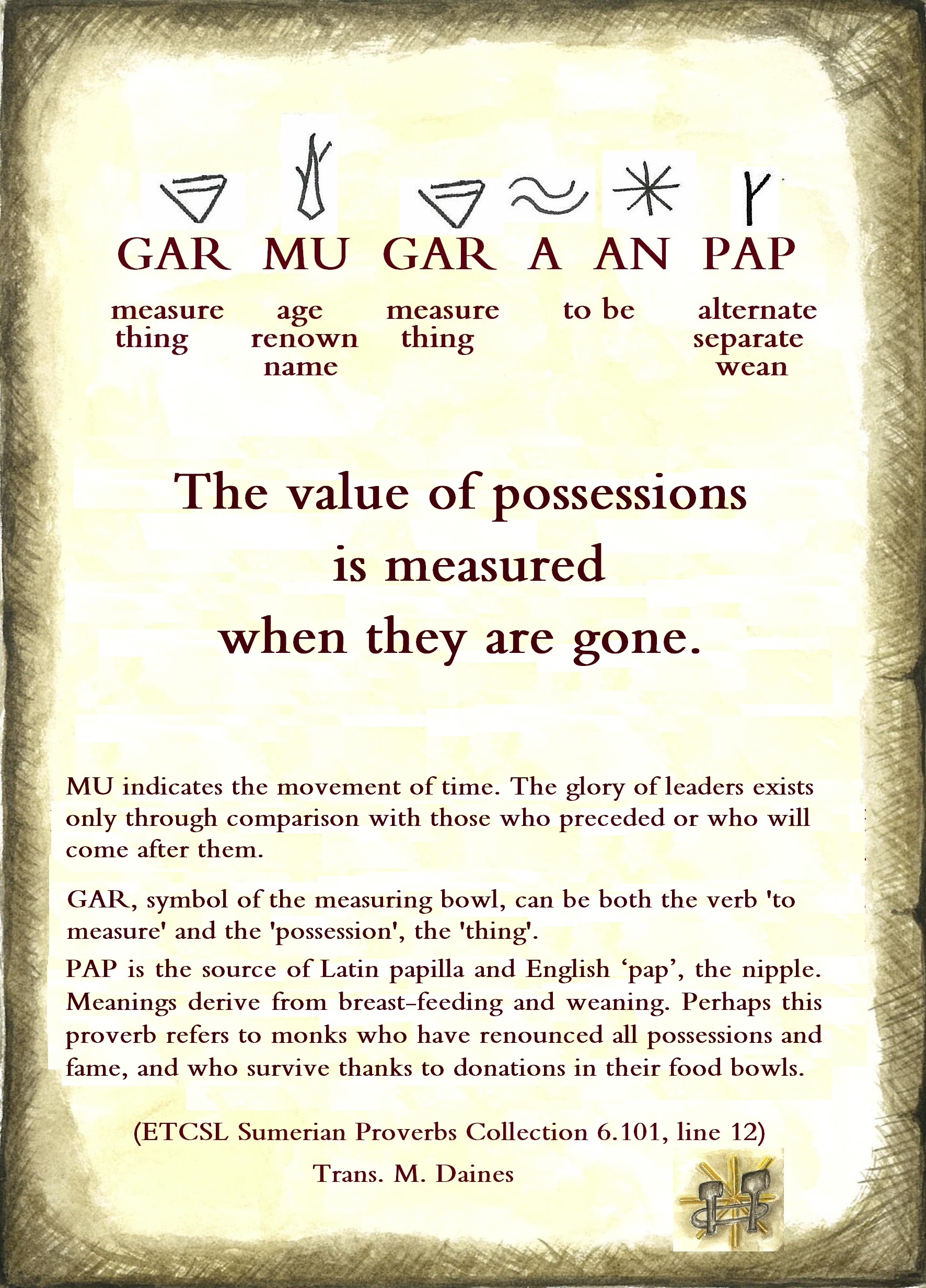
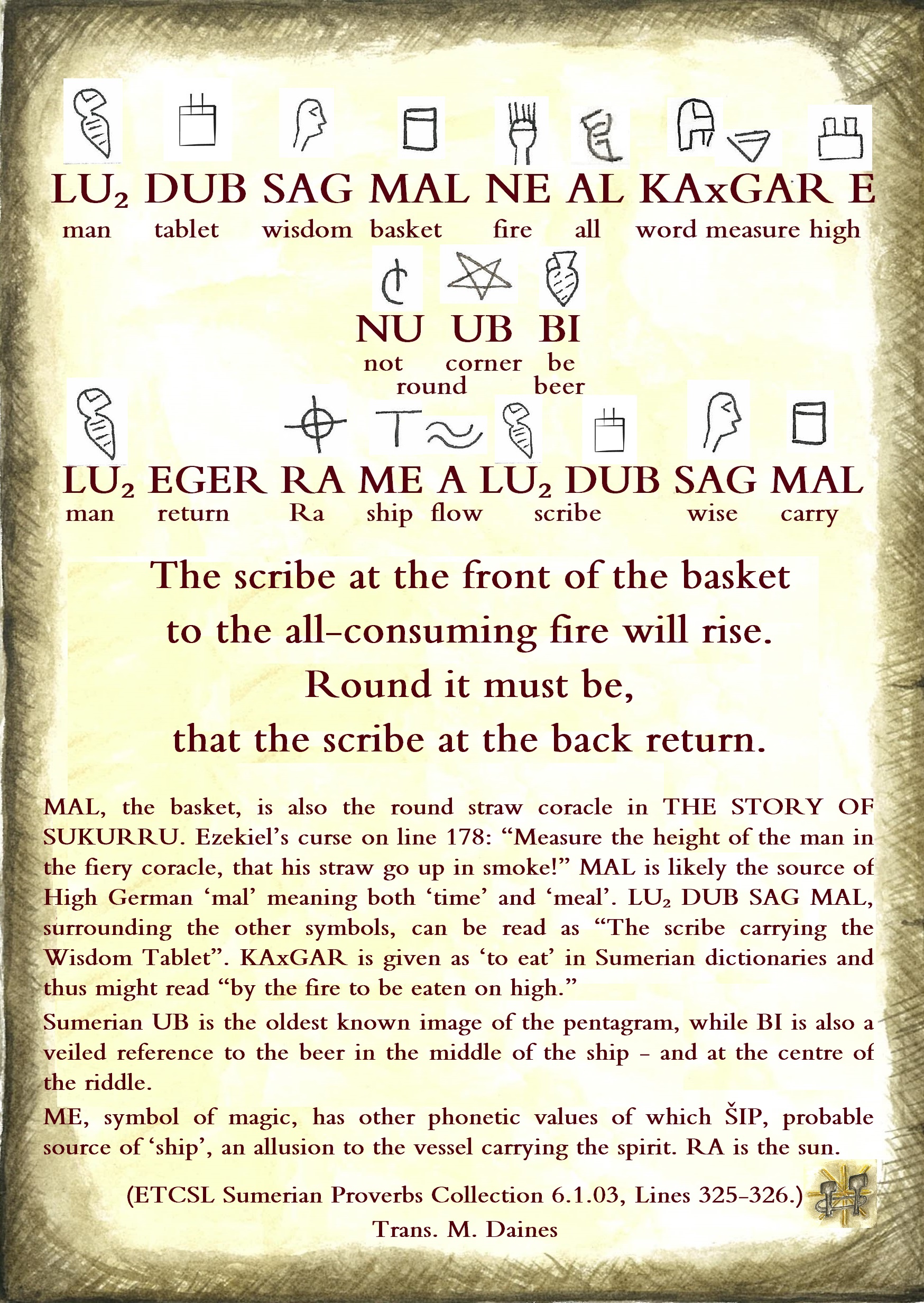
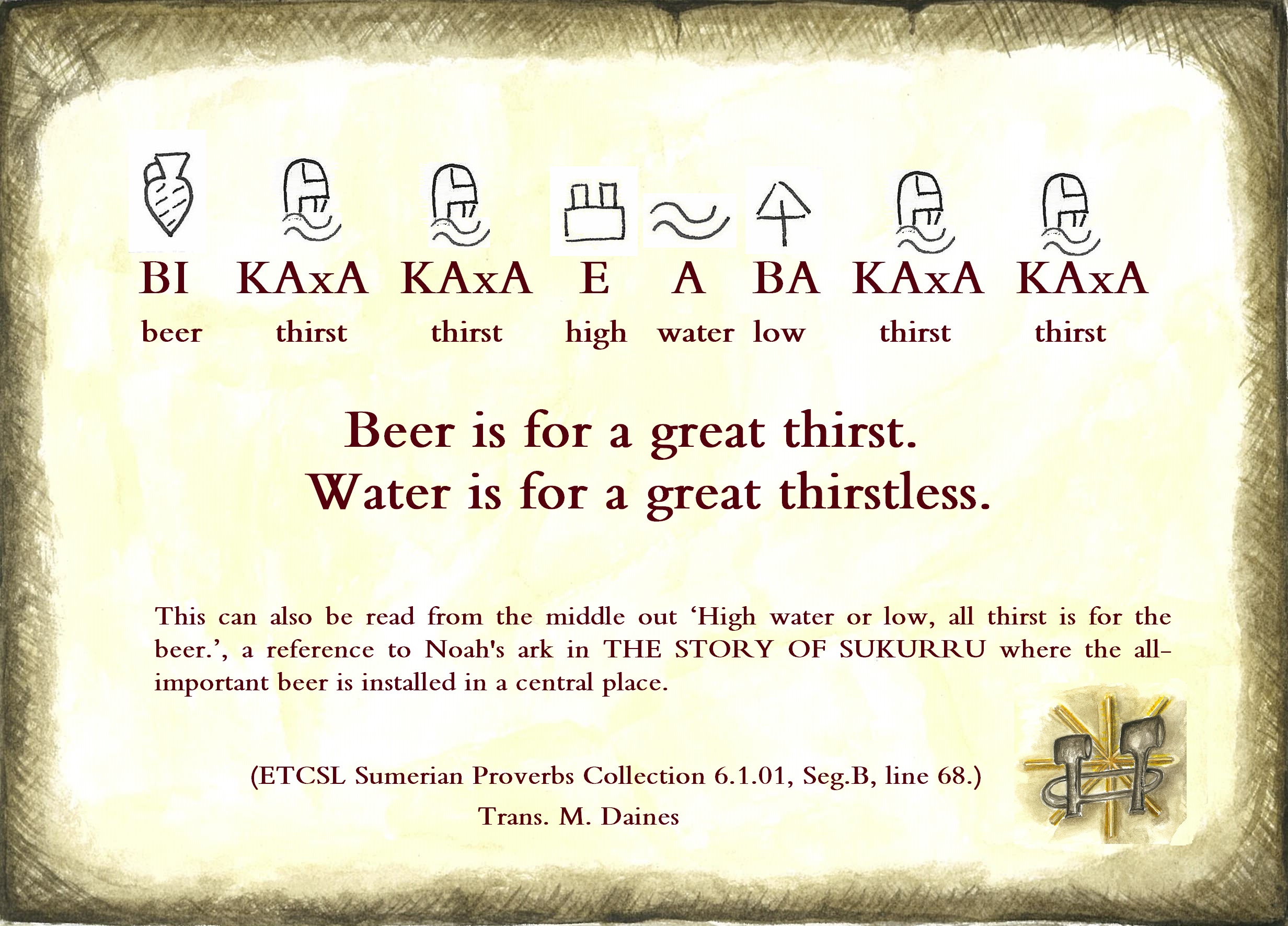
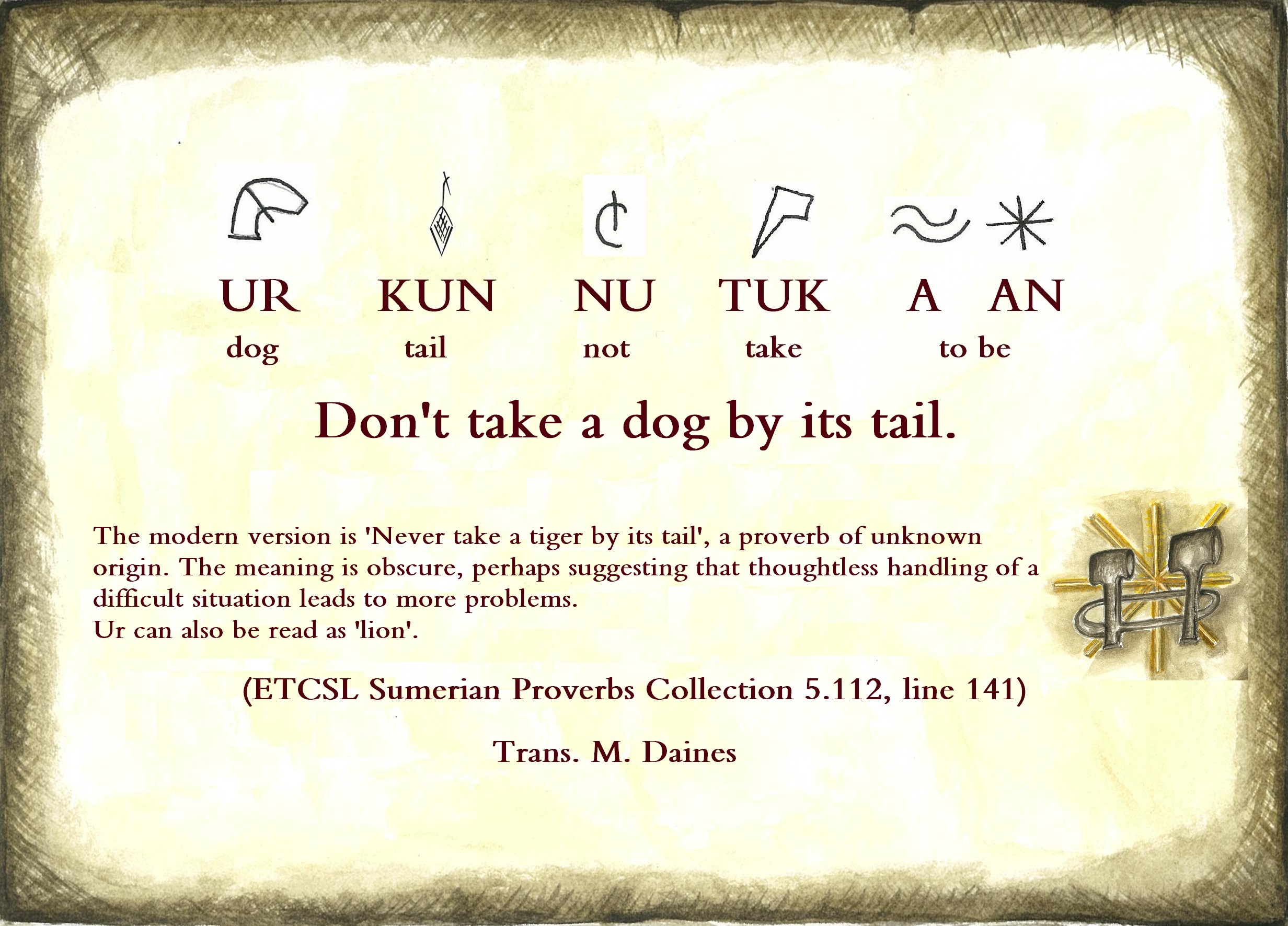
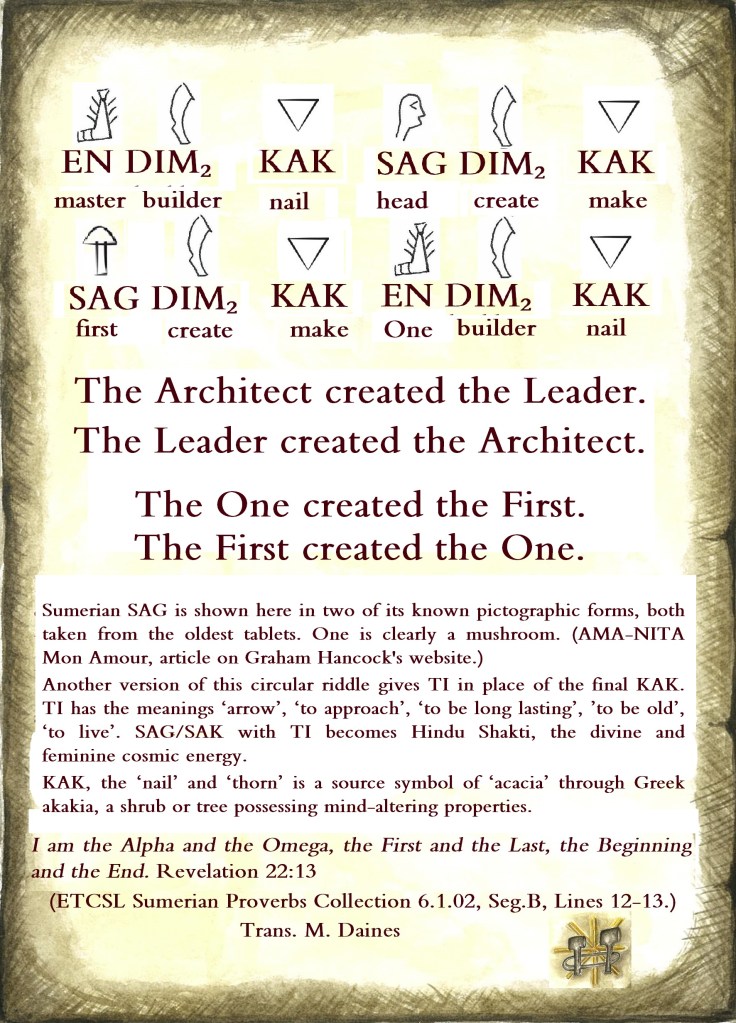
Sumerian Proverbs









 Signs of the Sumerians